Reflexology in Watford
Reflexology
Our expert podiatrists are here to help. Read more about the treatment details.
Price: £60
Book Now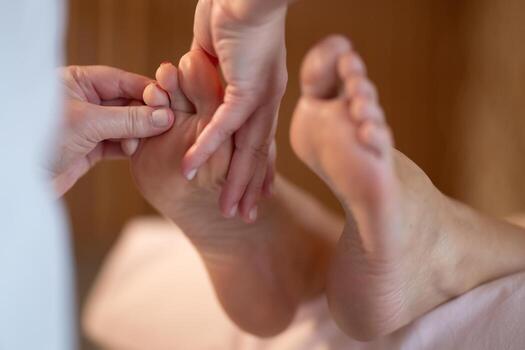
Reflexology
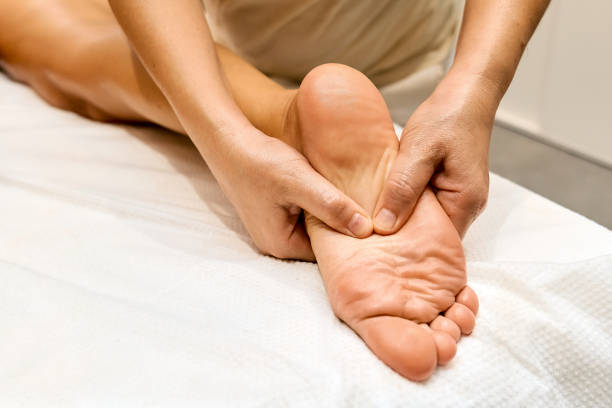
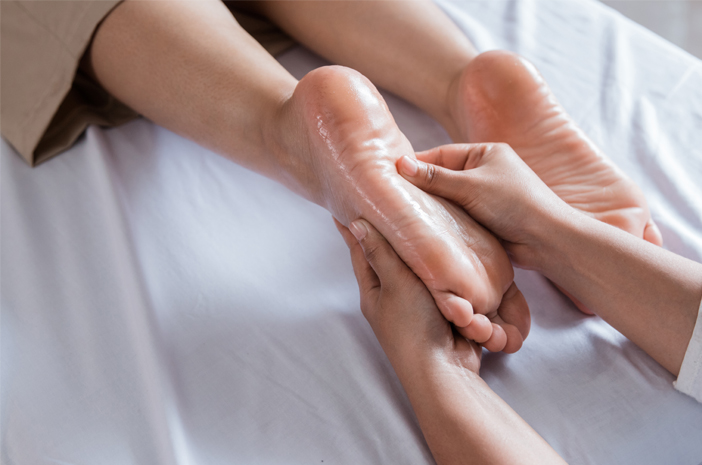
Reflexology is a complementary therapy that involves applying pressure to specific points on the feet, hands, or ears, which are believed to correspond to different organs and systems of the body. The goal is to promote relaxation, improve circulation, and support overall well-being.
🦶 Principles
of Reflexology
Based
on the idea that specific reflex points on the feet, hands, and
ears correspond to other parts of the body.
Stimulating
these points is thought to enhance the body’s natural healing processes.
Reflexology
is non-invasive and generally performed with gentle thumb, finger,
and hand techniques.
🔹 Common
Reflexology Zones (Feet)Toes: Head
and neck
Ball
of the foot: Chest and lung area
Arch
of the foot: Digestive organs (stomach, liver,
pancreas)
Heel:
Lower back and sciatic nerve
Inner
edge: Spine
(Similar maps exist for hands and ears.)
🔹 Potential
BenefitsRelaxation
and stress reduction
Improved
circulation
Pain
relief (e.g., headaches, back pain)
Enhanced
sleep quality
Support
for digestive and immune systems (though evidence is mostly anecdotal)
🔹 ProcedureAssessment: The
practitioner may ask about health history and symptoms.
Preparation: Feet
or hands are cleaned; the patient sits or lies comfortably.
Treatment:
Pressure is applied to reflex points using thumb, finger, or hand
techniques.
Duration:
Sessions typically last 30–60 minutes.
Aftercare:
Hydration is encouraged, and light activity is advised to support
circulation.
🔹 Safety and
Considerations Generally
safe for most people.
Avoid
in cases of foot fractures, infections, open wounds, or severe
circulatory issues.
Not a
substitute for medical treatment but can be used alongside conventional
therapies.
Pregnant
women and people with serious health conditions should consult a doctor
before treatment.
💡 Key
Point: Reflexology focuses on relaxation and supporting the body’s
natural balance rather than directly treating specific medical conditions.
It’s often used as a complementary therapy for stress relief and wellness.